• Floor Coatings
Shot Blasting vs Grinding vs Acid Etching
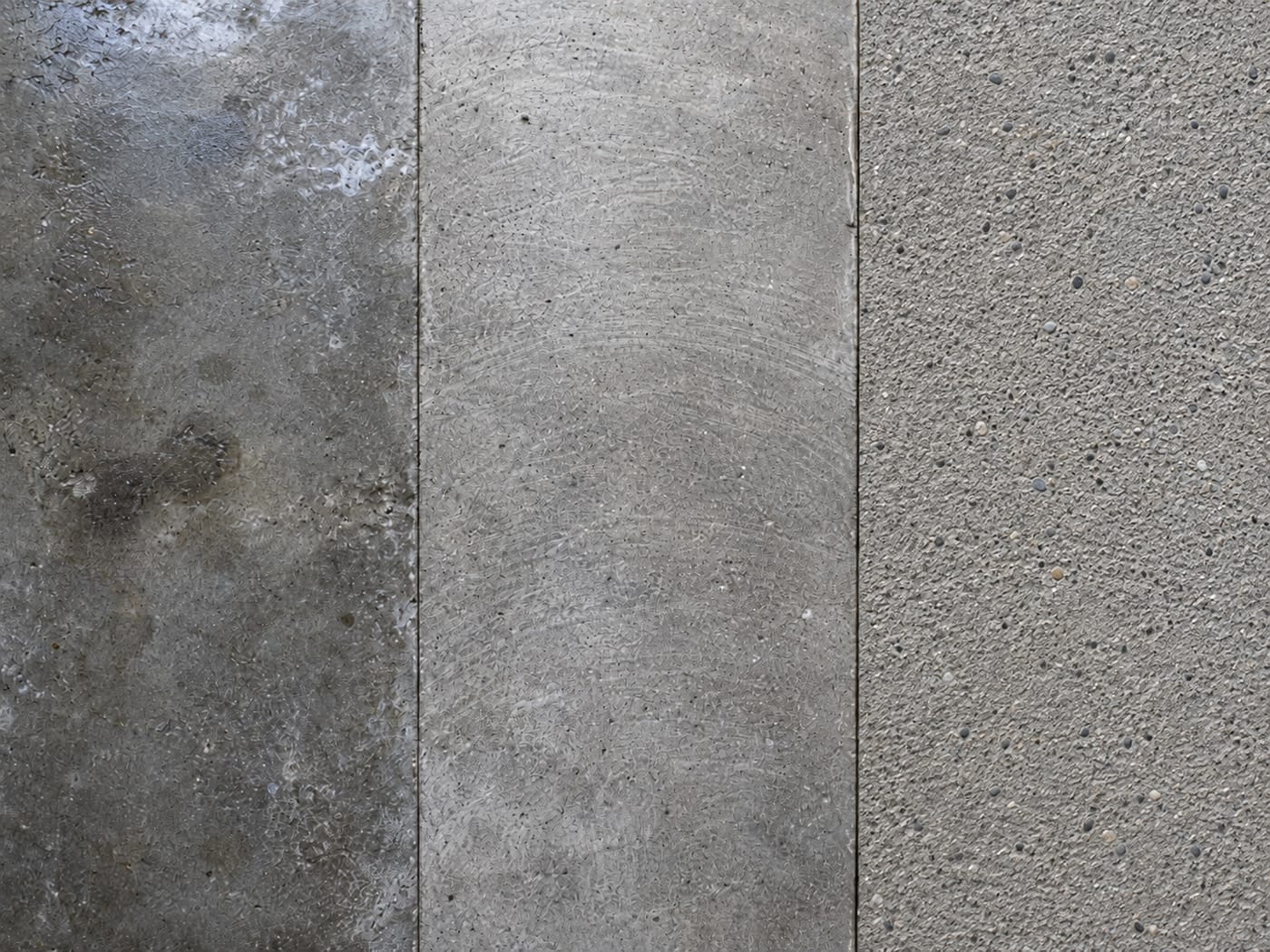
TL;DR
- Prep decides whether a coating lasts. A coating bonds mechanically, by flowing into the texture of the concrete and locking in as it cures. No texture, no grip.
- The industry measures texture on a scale. The International Concrete Repair Institute rates prepared concrete from CSP 1, nearly smooth, upward to very rough.
- Acid etching lands around CSP 1. It opens the pores but adds little texture, does not remove contamination, and soaks the slab with water.
- Diamond grinding lands around CSP 1 to 3. Excellent for edges, high spots and removing old coatings.
- Shot blasting lands around CSP 3 to 5 and higher. Uniform texture across the whole floor, with the dust collected as it works.
- Idaho slabs make the difference bigger. Years of de-icer, oil and freeze-thaw wear leave a contaminated, weakened top layer that has to be physically removed, not rinsed.
Why prep matters more than the coating
People shopping for a garage floor tend to compare products. Epoxy, polyaspartic, flake, metallic. The product matters, but it is not what usually fails.
A coating holds on mechanically. The liquid resin flows into the microscopic texture of the concrete, cures, and locks into it. If the surface is smooth, dusty, oily or weak, the coating is bonded to that, and it comes off with it.
That is why prep is roughly 70 percent of whether a floor lasts, and why the prep method is the most important line on any quote.
The scale everyone uses
The International Concrete Repair Institute publishes a standard called the Concrete Surface Profile, or CSP. It rates prepared concrete from CSP 1, which is nearly smooth, up through progressively rougher textures used for heavy overlays.
Installers compare a prepared floor against physical reference chips to confirm it has reached the right profile. The scale describes the finished surface, not the tool, but in practice each prep method tends to land in a predictable range.
Most high-build garage coating systems need a profile of at least CSP 3. Here is how the three common methods get there, or do not.
Acid etching
What it is. A diluted acid, usually muriatic, is spread on the slab, left to react, then neutralised and rinsed off.
What it produces. Around CSP 1. It opens the surface pores but adds very little real texture.
Where it falls short. It does not remove contamination. Oil, grease, old sealer, and chemical residue stay where they are, and acid does not react properly through them. It depends heavily on rinse quality, and residue left behind interferes with adhesion. It also floods the slab with water right before a coating goes on, and trapped moisture is one of the most common causes of a coating lifting.
Where it still has a place. Thin penetrating sealers that do not need a deep profile. It is also what most DIY kits specify, for the simple reason that a kit can ship a jug of acid but cannot ship an industrial machine.
Diamond grinding
What it is. A heavy floor machine with rotating diamond-segment heads that abrade the top of the slab, usually connected to a vacuum for dust control.
What it produces. Around CSP 1 to 3, depending on the grit and tooling.
Where it excels. Grinding is precise. It flattens high spots and lippage, cuts through old paint, sealer, and failed coatings, and handles areas a larger machine cannot reach. Along walls, in corners, and around drains, grinding is usually the right tool.
Where it falls short. On a large open area, grinding tends to leave a shallower and less uniform profile than a coating needing deep mechanical anchoring would ideally want. It is a very good tool, just not always the best primary one across a full two- or three-car floor.
Shot blasting
What it is. A walk-behind machine throws small steel shot at the slab at high speed. The shot fractures and removes the weak surface layer, is recovered by the machine, and is recycled while a connected vacuum collects the dust.
What it produces. Around CSP 3 to 5, and higher with larger shot or slower passes. Sika, one of the largest construction chemical manufacturers in the world, describes steel shot blasting as the industry standard for concrete surface preparation.
Why it suits coatings. It produces a consistent, open texture across the whole floor, which is exactly what a high-build system needs to lock into. It also physically removes contaminated concrete rather than trying to treat it, and it is a dry process, so nothing is added to the slab that then has to dry out.
Where it falls short. A shot blaster cannot reach the last few inches along walls and into tight corners, so those areas are typically finished with a grinder. That is normal and it is why good prep often uses both.
Why an Idaho slab makes the choice matter more
This is where the method stops being a technical detail.
Contamination is baked in. A Magic Valley garage slab has absorbed years of road de-icer, oil drips, and grime. Magnesium chloride in particular attacks the binder that holds concrete together, as we covered in what Idaho de-icer does to concrete. That contaminated layer needs to come off physically. Acid cannot rinse it away.
The surface is often weakened. Freeze-thaw cycling and chloride exposure leave older slabs with a soft, chalky or scaling top layer. Coating over that bonds the new floor to the weakest concrete in the building. Mechanical prep removes it and reveals what is actually underneath, which is one reason older and cracked slabs often clean up better than expected.
Water is the enemy here. An unheated Magic Valley garage dries slowly for much of the year. Acid etching saturates the slab with rinse water right before coating, and a slab that has not fully dried is how blistering starts. Dry mechanical prep avoids adding the problem in the first place. It is also part of why timing an install matters in this climate.
What to ask on any quote
- Which prep method is included, specifically, and is it written on the quote?
- What surface profile are you preparing to?
- How are edges and corners handled?
- How is dust controlled?
- Is moisture tested before coating?
If the answer to the first question is vague, that tells you something. There are more questions worth asking in our guide to choosing between a local contractor and a franchise.
How we prep
Every Armor Shine floor starts with diamond shot blasting, followed by a moisture vapor barrier epoxy base coat, flake broadcast, and a UV stable polyaspartic clear. The prep is the step nobody sees once the floor is finished, and it is the step we are least willing to shorten. The full build is on our how it works page.
See what your slab needs
The right prep depends on what your concrete has been through. A free in person estimate includes looking at the slab, testing moisture and a flat written price with the prep method spelled out. No pressure, no gimmicks.
Get My Free Quote · (208) 731-1729
Twin Falls, ID. Serving the Magic Valley including Jerome, Kimberly, Burley and Mini-Cassia, Buhl, Filer, Wendell, Gooding and the Wood River Valley.
Frequently asked questions
Is acid etching good enough for a garage floor coating? For a thin penetrating sealer, sometimes. For a high-build coating system, generally not. Acid etching produces very little texture, does not remove oil or other contamination, and leaves the slab wet right before coating.
Is shot blasting better than grinding? They do different jobs well. Shot blasting produces a deeper, more uniform profile across open floor and removes contaminated concrete efficiently. Grinding is more precise and is the better tool for edges, corners, high spots and removing old coatings. Good prep often uses both.
Does shot blasting damage the concrete? No. It removes only the weak top layer and leaves a textured surface. Grinding and shot blasting introduce essentially no microcracking into the slab, unlike heavier impact methods.
Is shot blasting messy? It is designed not to be. The steel shot is recovered and reused by the machine, and a connected vacuum collects the dust as it works.
Why do DIY kits use acid etching? Because it is the only prep method that can be shipped in a box. Shot blasters and industrial grinders are heavy, expensive machines. That is a limitation of the kit, not evidence that acid etching is the best method.
Can an old coated floor be prepped for a new coating? Usually, yes. Old paint, sealer and failed coatings are generally removed mechanically before a new system goes down. What that takes depends on the existing coating and needs to be seen in person.