• Floor Coatings
Storing Seasonal Gear in an Unheated Idaho Garage
TL;DR
- Most gear is fine out there. Twin Falls is dry, and low humidity is kind to metal, tools and most equipment.
- The problem is the swing, not the cold. The garage runs from the low twenties in January to the nineties in July, and in winter it crosses freezing most days rather than staying frozen.
- Liquids are the first casualty. Latex paint freezes at roughly the same temperature as water, and repeated freeze and thaw cycles ruin it faster than one hard freeze.
- Food of any kind is a mistake. Including pet food, and especially in an agricultural valley with real rodent pressure.
- Anything you touch twice a year goes overhead. That is what the ceiling is for.
- Doors beat open shelves for anything that minds dust, and this valley makes plenty of it.
What your garage actually does over a year
Start with the real conditions, because most storage advice is written for a different climate.
Twin Falls runs roughly 23 degrees to 90 across a year. Winter averages sit near 34 for highs and 24 for lows, which means an unheated garage does not simply stay frozen through the season. It crosses the freezing point most days and then crosses back.
Summer is the other end. With around 210 sunny days a year and a closed door, a garage builds real heat.
But here is the part people get wrong. This is high desert, and it is dry. Annual precipitation is around ten inches. Low humidity is genuinely good news for storage, because it is humidity that rusts tools, grows mould and ruins fabric. A Magic Valley garage is much kinder to gear than a garage in a humid climate.
The things that fail here fail from temperature, from pests, or from dust. Not from damp.
What stores perfectly well
Most of what is in your garage right now is fine.
Hand tools, power tools, yard equipment, bikes, camping hardware, coolers, tents, sleeping pads, luggage, sporting equipment, hoses, ladders, holiday decorations, plastic totes of almost anything.
Dry air means metal tools do not rust the way they would elsewhere. A coated floor means the one genuine moisture source, which is snowmelt running off a vehicle, stays on the surface and gets mopped up rather than soaking into the slab and raising humidity around everything stored low.
The job with this category is not protection. It is organisation, which means getting it off the floor and into a system where you can find it.
What needs thinking about
Anything liquid. This is the big one. Latex paint freezes at roughly the same temperature as water, and once it has frozen and thawed it does not recover. Our daily freeze and thaw cycling is harder on it than a sustained cold snap would be, because it happens over and over. The same applies to adhesives, caulk, water based stains and many cleaning products. Read the label for a storage temperature range and take it seriously.
Batteries. Cold reduces capacity and repeated cycling shortens life. This matters most for the seasonal vehicles people keep here, meaning snowmobiles, boats, ATVs and mowers. Either bring the battery inside for the off season or run a maintainer.
Propane. Tanks for grills and camp stoves should be outdoors, not in an enclosed garage, regardless of season.
Anything with a screen or a circuit board. Temperature extremes are hard on electronics, and a garage swinging seventy degrees across a year is not a storage environment for them.
Down and technical fabrics. Sleeping bags and insulated gear should be stored loose rather than compressed, and they will absorb garage odours over time. If you have good equipment, it belongs inside.
Fishing line, rope and anything synthetic near a window. With the sun this valley gets, UV degrades synthetic fibre faster than people expect.
What should not be out there at all
Food. Any food. Canned goods go through the same freeze and thaw cycle as everything else, and the Magic Valley is agricultural country with genuine rodent pressure. A bag of dog food in a garage is an invitation.
Pet food especially. Same reason, and it is the single most common mistake.
Paper you care about. Documents, photographs and books deteriorate in an uncontrolled environment and attract silverfish.
Oily rags. Spontaneous combustion is a real fire risk. They go in a sealed metal container or they go out.
Spare fuel beyond what you need, and only ever in proper containers away from anything that could ignite it.
Firewood. It brings termites, spiders and rodents right up against the structure.
The rotation, which is the real problem here
Southern Idaho runs four genuinely distinct gear seasons, and most garages have never been set up for that.
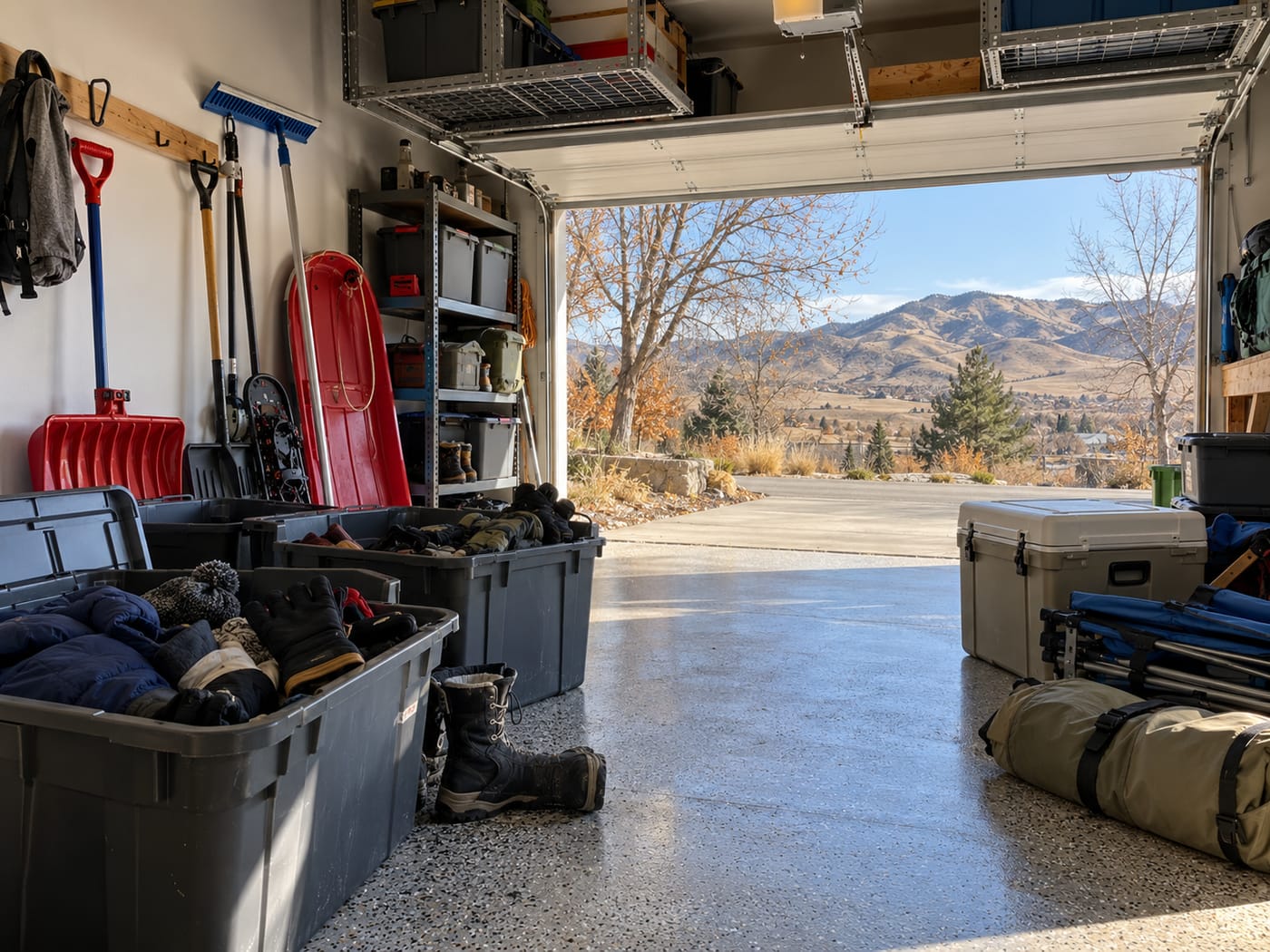
Snow shovels, roof rakes, sleds and ski equipment in winter. Bikes, yard tools and garden supplies in spring. Camping, fishing and river gear through summer. Hunting gear in autumn, then back to snow.
In a garage with no system, all four sets compete for the same floor and the same couple of hooks all year. That is why the snow shovel is still against the wall in July.
The fix is zoning by frequency rather than by category.
Overhead takes whatever is out of season. Holiday bins, camping gear in January, snow equipment in July. If you touch it twice a year, it belongs on the ceiling, which is covered in our guide to overhead storage.
Walls take the current season and anything awkward. Bikes, long handled tools, hoses, folding chairs. Slatwall handles this well because the accessories move, so the wall changes when the season does.
Cabinets take anything that minds dust, needs to stay clean or should be out of reach. That is the full argument in open shelving versus closed cabinets.
The floor takes vehicles. That is it.
The twice a year swap
The households that stay organised do a deliberate changeover rather than letting gear drift.
Late September or early October, before the first freeze, bring winter equipment down and send summer gear up. Late April or May, reverse it. Each swap takes under an hour in a garage with a real system, and it is also the natural moment to notice what you have not used in two years.
It is also a good time to give the floor a proper clean before winter brings salt in on the tires, which we cover in the floor care guide.
Build the system once
Most garage clutter is not a discipline problem. It is a design problem, and it is fixable in a single project rather than a series of weekends.
A free in person estimate covers measuring the space, working out what belongs overhead, on the walls and behind doors, and a flat written price. No pressure, no gimmicks.
Get My Free Quote · (208) 731-1729
Twin Falls, ID. Serving the Magic Valley including Jerome, Kimberly, Burley and Mini-Cassia, Buhl, Filer, Wendell, Gooding and the Wood River Valley.
Frequently asked questions
Can I store paint in an unheated Idaho garage? Not through winter. Latex paint freezes at roughly the same temperature as water, and our garages cross that point regularly from December through March. Once it has frozen and thawed it is usually ruined. Store it inside or in a conditioned space.
Will my tools rust in a garage here? Far less than they would in a humid climate. The Magic Valley is high desert with around ten inches of annual precipitation, and dry air is kind to metal. The exception is tools sitting on the floor where snowmelt runs off a vehicle, which is one more reason to get things up off the slab.
Is it safe to store camping gear in the garage? Most of it, yes. Tents, pads, cookware, coolers and hardware are fine. Down sleeping bags and insulated clothing are better inside, stored loose rather than compressed, because they absorb odours and lose loft over time.
Why can't I keep pet food in the garage? Rodents. This is farm country and the pressure is real, and a bag of pet food is the most reliable way to attract them. Temperature swings also degrade it. If it has to be out there, it goes in a sealed metal or heavy duty plastic container, not the original bag.
What about a second fridge or freezer in the garage? Many struggle in an unheated garage, because the temperature swings interfere with how the thermostat is designed to work. Some models are rated for garage use. Check before assuming.
When should I do the seasonal swap? Late September or early October to bring winter gear down, and late April or May to reverse it. Doing it before the first hard freeze means you are not digging for a snow shovel in the dark.
Does a coated floor help with storage? Indirectly, yes. Snowmelt and spills stay on the surface instead of soaking into porous concrete, which keeps moisture away from whatever is stored low and makes the floor easy to sweep when you are moving things around.