Cabinets (closed storage)
Best for: tools, chemicals, anything you want dust-free and out of sight.
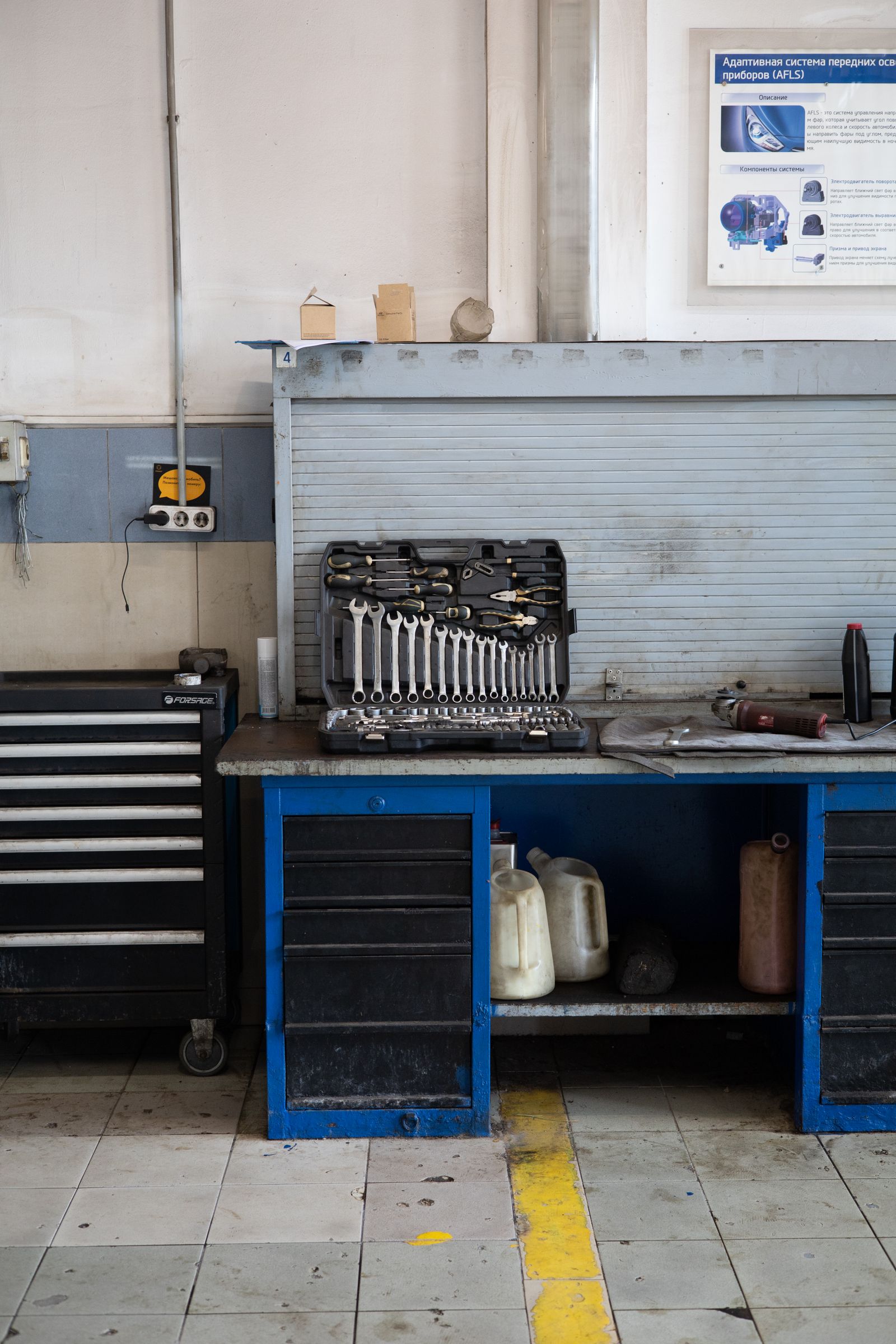
Doors keep concrete dust, grit and prying little hands out, and a run of matched faces makes the whole wall read as a finished room instead of a junk pile. The tradeoff is cost and footprint — cabinets are the priciest option per foot and they take floor or wall depth. But nothing else does what a cabinet does: hide the mess, protect the contents and look built-in.
Open shelving
Best for: bulk bins, totes, bins you dig through often.
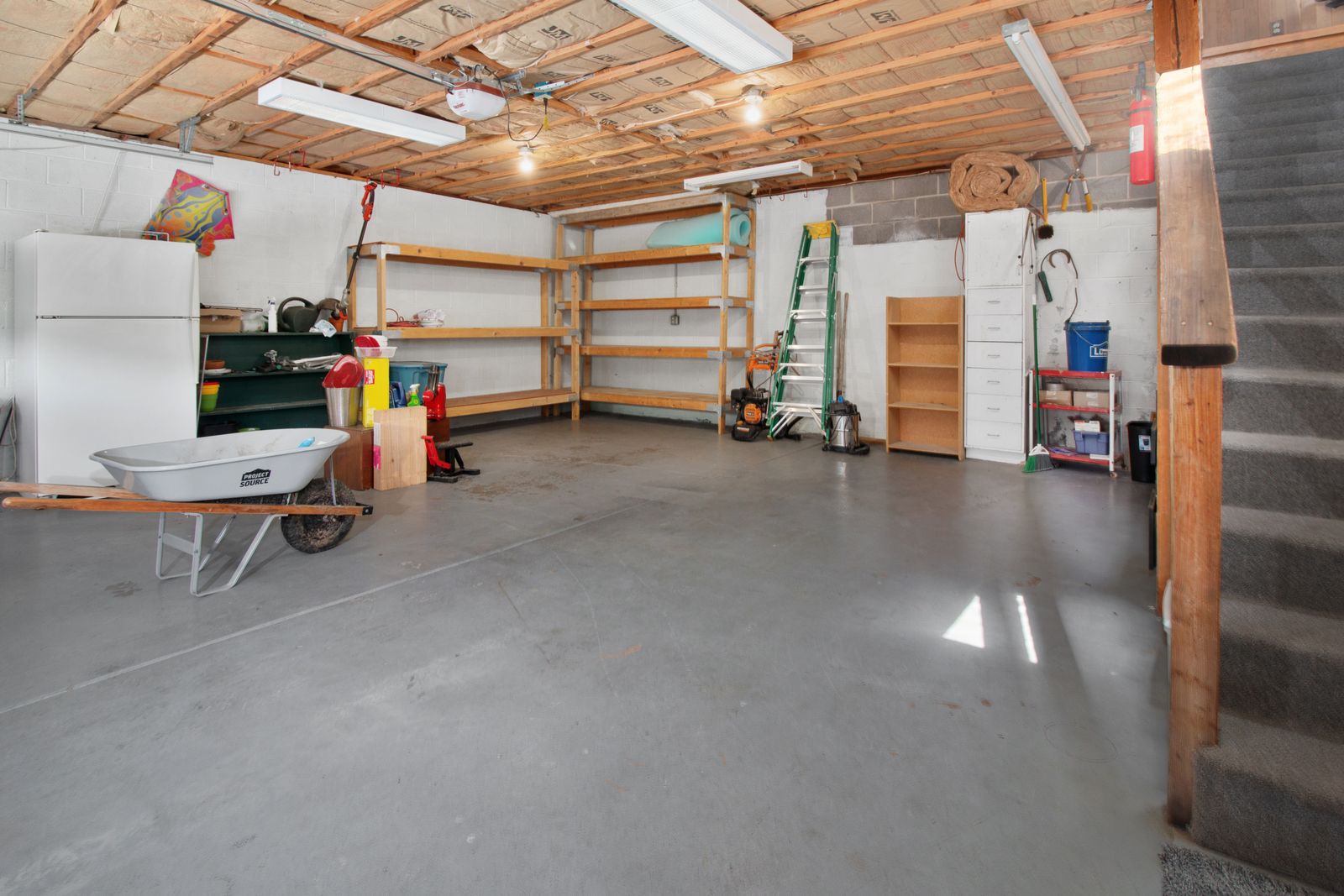
The cheapest and fastest way to add storage, and you can see everything at a glance. The catch is that open shelving is why most garages still look cluttered a year later — everything on it collects dust, and mismatched boxes on a bracket read as a pile no matter how neatly you stack them. Great as a supporting player, poor as the whole plan.
Slatwall
Best for: hand tools, hoses, bikes, rakes — anything that hangs.
A continuous slatwall panel turns a bare stud wall into a grid you can hang almost anything on, and rearrange in seconds as your needs change. It is the most flexible system foot-for-foot. The tradeoff is that it stores by hanging, not enclosing — so it clears the floor beautifully but does nothing to hide dust or lock up chemicals. Pair it with cabinets, don’t replace them.
Overhead racks
Best for: seasonal totes, luggage, lumber — light-to-medium long-term storage.
Ceiling-mounted racks are the single fastest way to clear the floor because they use space nothing else can — the dead air above the garage door. The tradeoffs are obvious: you need a step stool to reach them, and they are for storage you rarely touch, not daily gear. Mounted into the ceiling framing, though, a good rack reclaims a huge amount of room for almost nothing.